
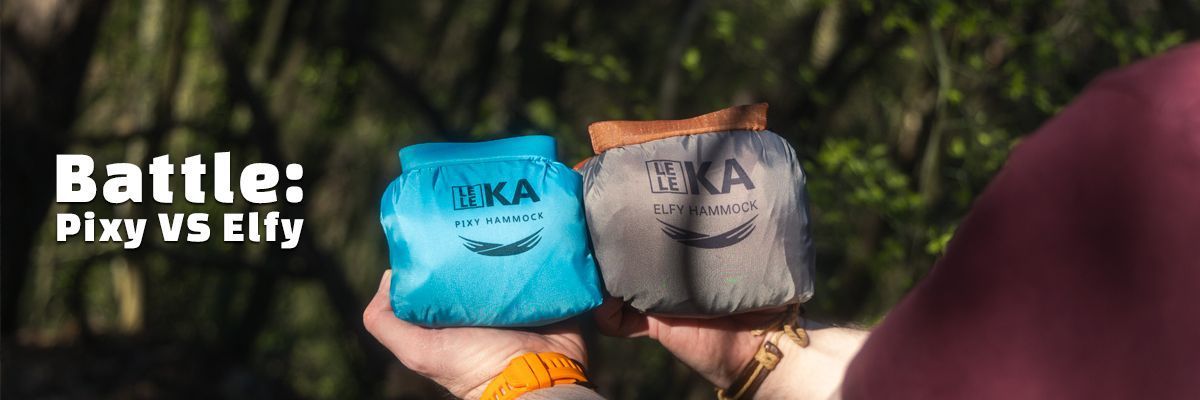
The Fabric: Where It All Starts
This is the core difference between our two hammocks, and everything else flows from here.
Pixy is made from Nylon 20D — a classic ultralight hammock fabric. It's smooth to the touch, durable, slightly wind-resistant, and has a clean, structured feel. Nylon 20D is a proven material in the UL world. It holds up well across conditions and gives the hammock a slightly more "solid" hang.

Elfy is our monofilament hammock, built from Monolite Mesh 20D — an entirely different manufacturing technology compared to woven nylon. Monofilament yarn is transparent and has an open structure that air moves through freely. On a warm night, this is the difference between lying in a cocoon and lying in a breeze.
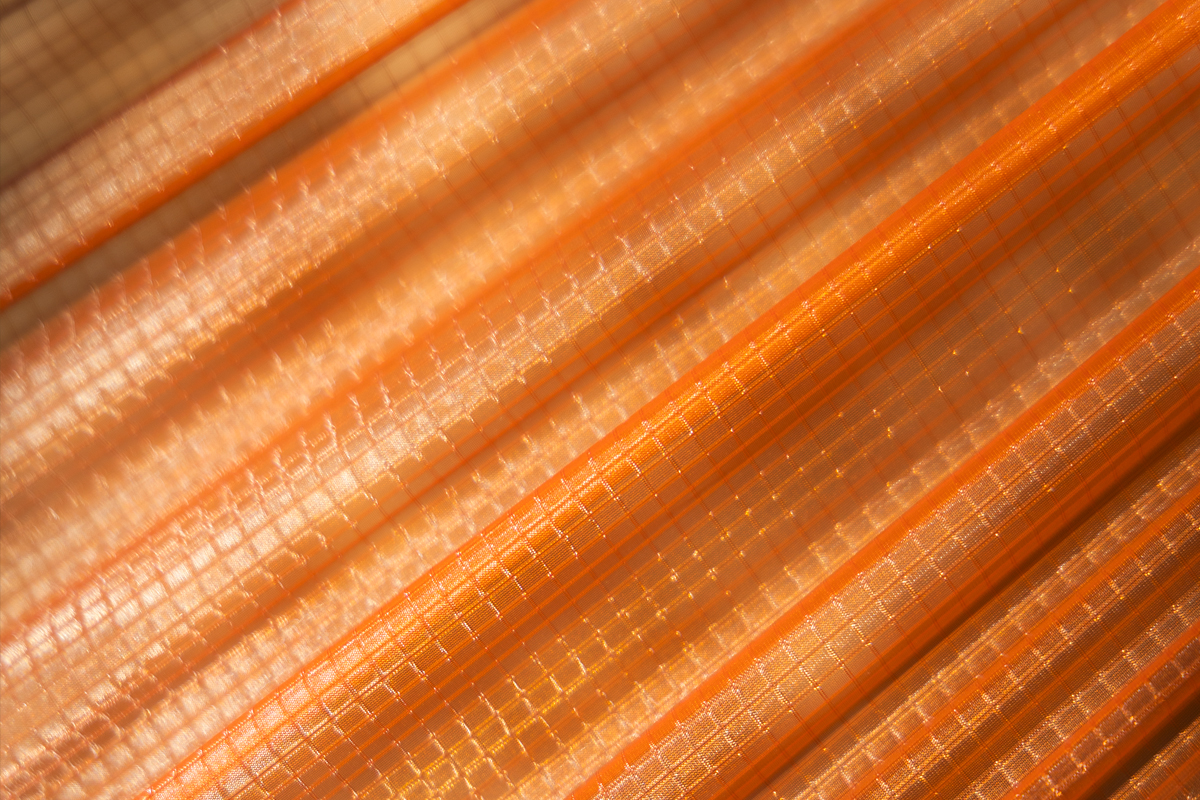
Both are lightweight, packable, and tough enough for regular trail use. But they feel different — and that feeling matters when you're trying to fall asleep after a long day on the trail.
Weight: Grams That Actually Matter
In ultralight backpacking, every gram is a decision. Here's where our hammocks land:
| Size M | Size XL | |
|---|---|---|
| Pixy | 150g | 190g |
| Elfy | 135g | 175g |
Elfy is lighter by 15 grams across both sizes. This comes down to manufacturing technology: monofilament yarn is inherently lighter than woven nylon. In a UL setup where you're already counting the weight of tent stakes and a toothbrush, 15 grams is a conscious choice.
Both hammocks are among the lightest in their category.
Breathability: The Real-World Test
This is where Elfy genuinely stands apart.
Monolite Mesh 20D has an open monofilament structure — air passes through it with almost no resistance. On warm nights, this means natural airflow across your body while you sleep. No trapped heat. No waking up sweaty at 2am.
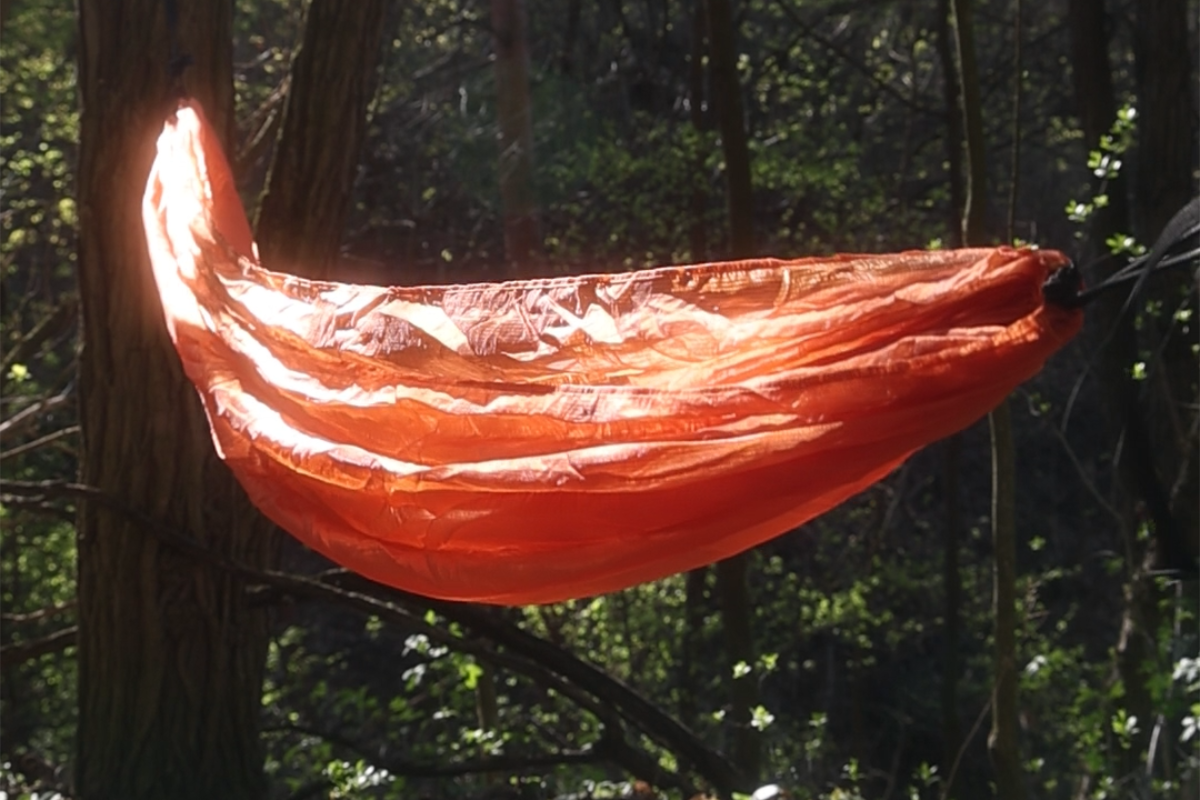
Nylon 20D, by comparison, is a closed weave. It's breathable compared to, say, a polyester tarp — but it doesn't come close to monofilament in terms of airflow. On a cool autumn night, that's actually a feature: the nylon holds slightly more warmth around you.
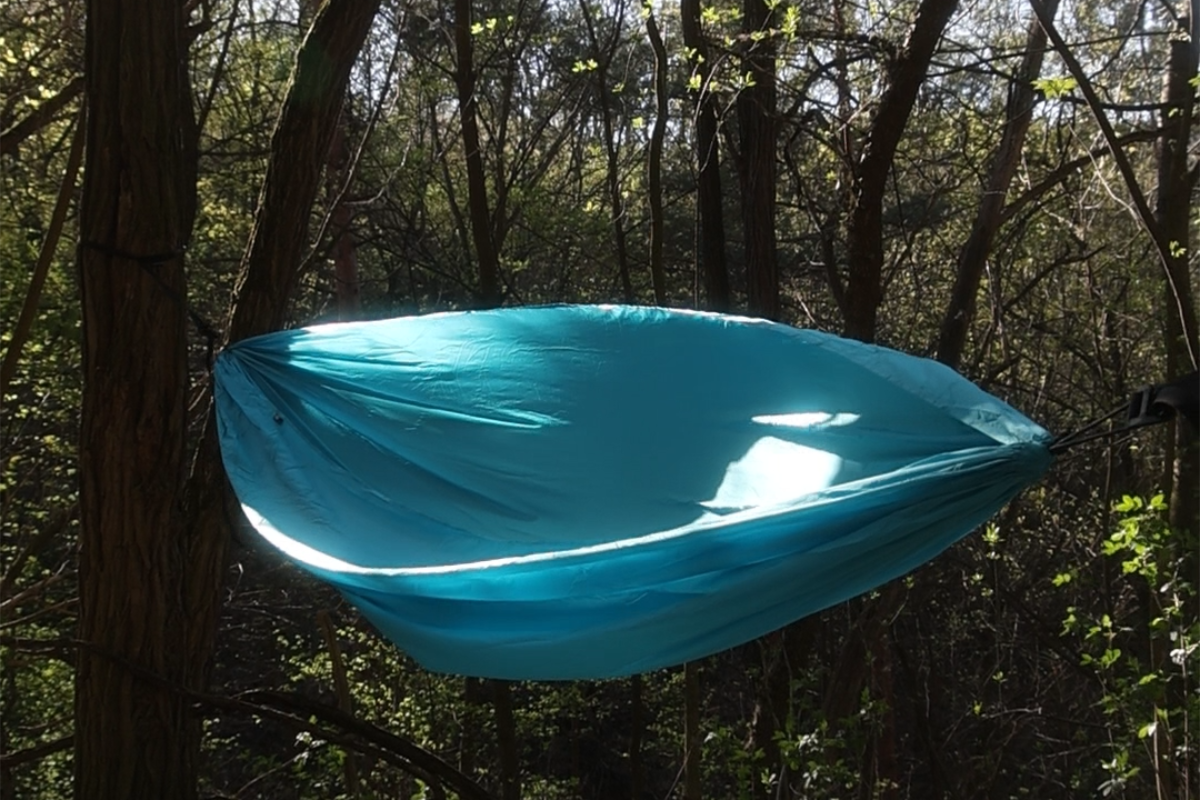
A quick field test makes this obvious: blow hard through a patch of Elfy fabric and you'll feel the air move freely through to the other side. Do the same with Pixy and there's noticeably more resistance.
The practical takeaway: If you run hot, sweat easily, or camp in warm weather — Elfy will sleep significantly more comfortably. If you camp across seasons and prefer a slightly warmer, more structured feel — Pixy gives you that.
Is Elfy Only a Summer Hammock? No.
This is one of the most common misconceptions about monofilament hammocks.
Because Elfy breathes so well, people assume it's a warm-weather-only product. It's not. With the right insulation setup, Elfy handles cold conditions just as well — you just need to approach warmth differently than you would with a closed-weave fabric.
The key is underquilt insulation. In a hammock, cold air attacks you from below — the ground effect still applies even when you're hanging. An underquilt traps warm air beneath the hammock, making the fabric's breathability irrelevant to warmth. With a proper underquilt, Elfy is a capable four-season hammock.
In fact, some cold-weather hammock campers prefer monofilament specifically because they can fine-tune temperature regulation with layered insulation, rather than relying on the hammock fabric itself to hold warmth.
Packability: Both Disappear Into Your Pack
One of the best things about Pixy and Elfy is how small they get.
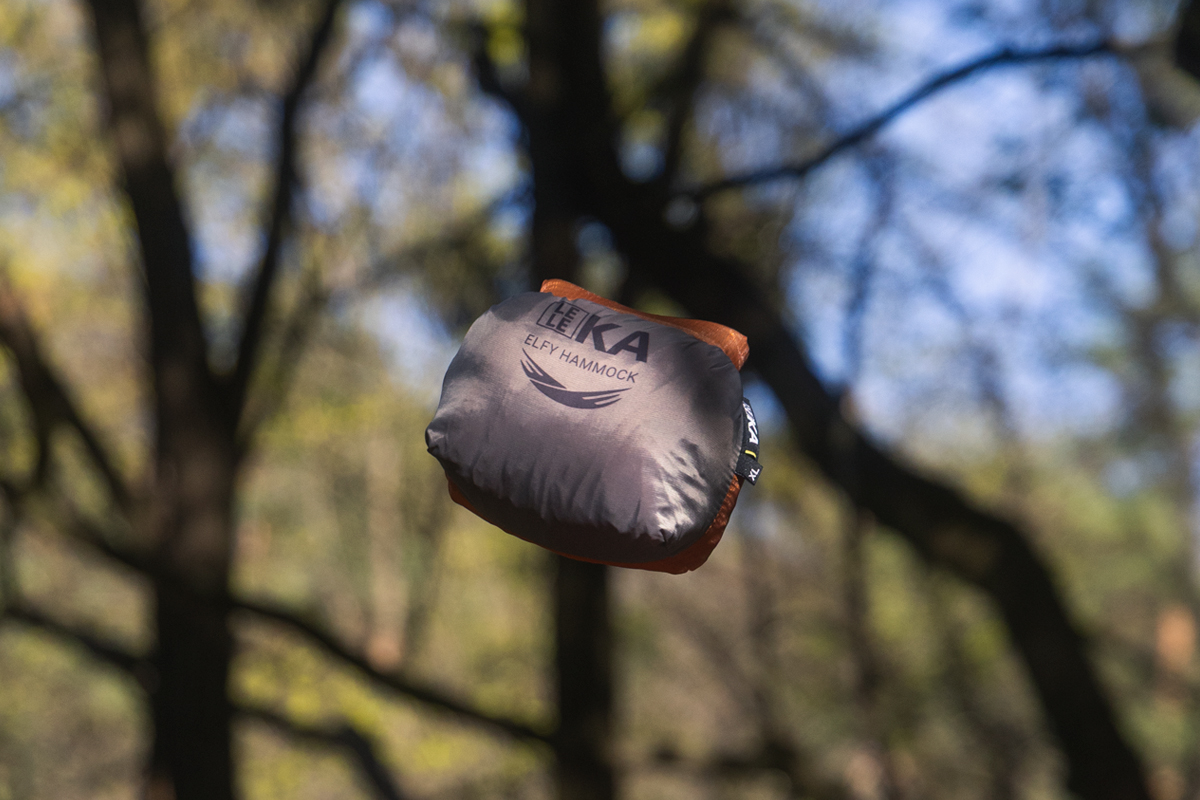
Both compress into their own integrated stuff sack and pack down to roughly the size of a large fist. For context, we're talking the footprint of a water bottle, or a pair of balled-up hiking socks.
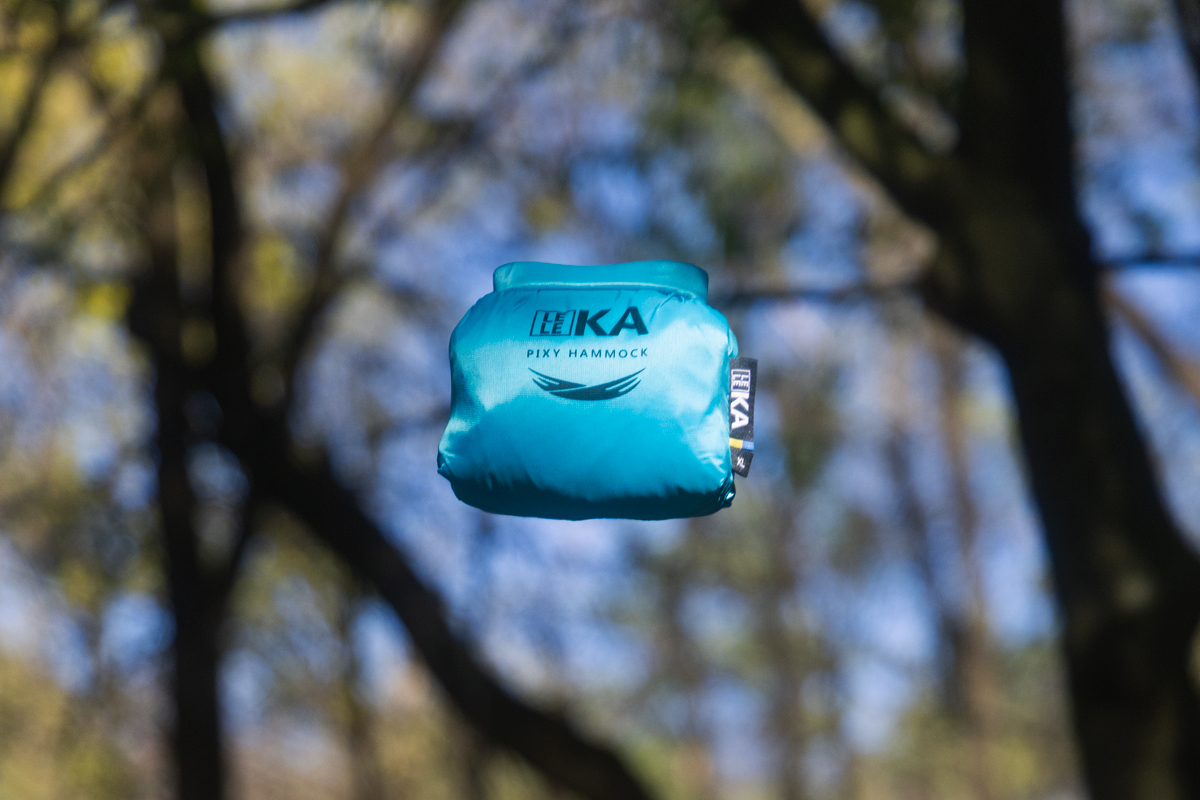
The slight edge here goes to Pixy — nylon compresses more efficiently than monofilament, so it packs down a little smaller. For anyone counting every liter of pack volume, that's worth knowing. That said, both are small enough to become a permanent fixture in your kit — always in the bag, no second-guessing.
So Which One Should You Choose?
Here's the honest answer:
Choose Elfy if:
- You sleep warm or camp in hot/humid conditions
- Breathability and airflow are a priority
- You want the lightest possible option
- You're planning to pair it with an underquilt for multi-season use
Choose Pixy if:
- You prefer a classic nylon hammock feel
- You camp across a wide range of temperatures and don't want to think about insulation layering
- You like a slightly more structured hang and better compression
- Budget matters: Pixy is significantly more affordable
Both hammocks are available in M and XL sizes. If you're taller than 185cm or prefer more room to lay diagonally, go XL — the diagonal position is the key to a flat, comfortable sleep in any hammock.
Final Word
Pixy and Elfy aren't competing products — they're two different answers to the same question: how do you carry your sleep setup in the least amount of weight and space?
Pixy is the all-conditions nylon classic at an accessible price point. Elfy is our monofilament hammock — breathable, ultralight, and fully capable across all seasons with the right insulation.
Pick the one that fits how you camp. Either way, you're sleeping off the ground.
Both hammocks are made in Ukraine by Leleka. Available in multiple colors and two sizes. → leleka.camp


